Two kinds of termites cause most of the damage we find in homes across Ventura, Santa Barbara and Los Angeles counties: the western drywood termite and the western subterranean termite. They live differently, leave different signs, and need different treatment, so knowing which one you have is the first step. A third kind, the dampwood termite, turns up in wet wood near the coast.
The Quick Comparison
- Where They Live Drywood termites live inside dry wood and never need soil. Subterranean termites nest in the soil and travel up into the house.
- Colony Size Drywood colonies are small, usually fewer than 1,000 termites. Mature subterranean colonies can hold hundreds of thousands, per UC IPM.
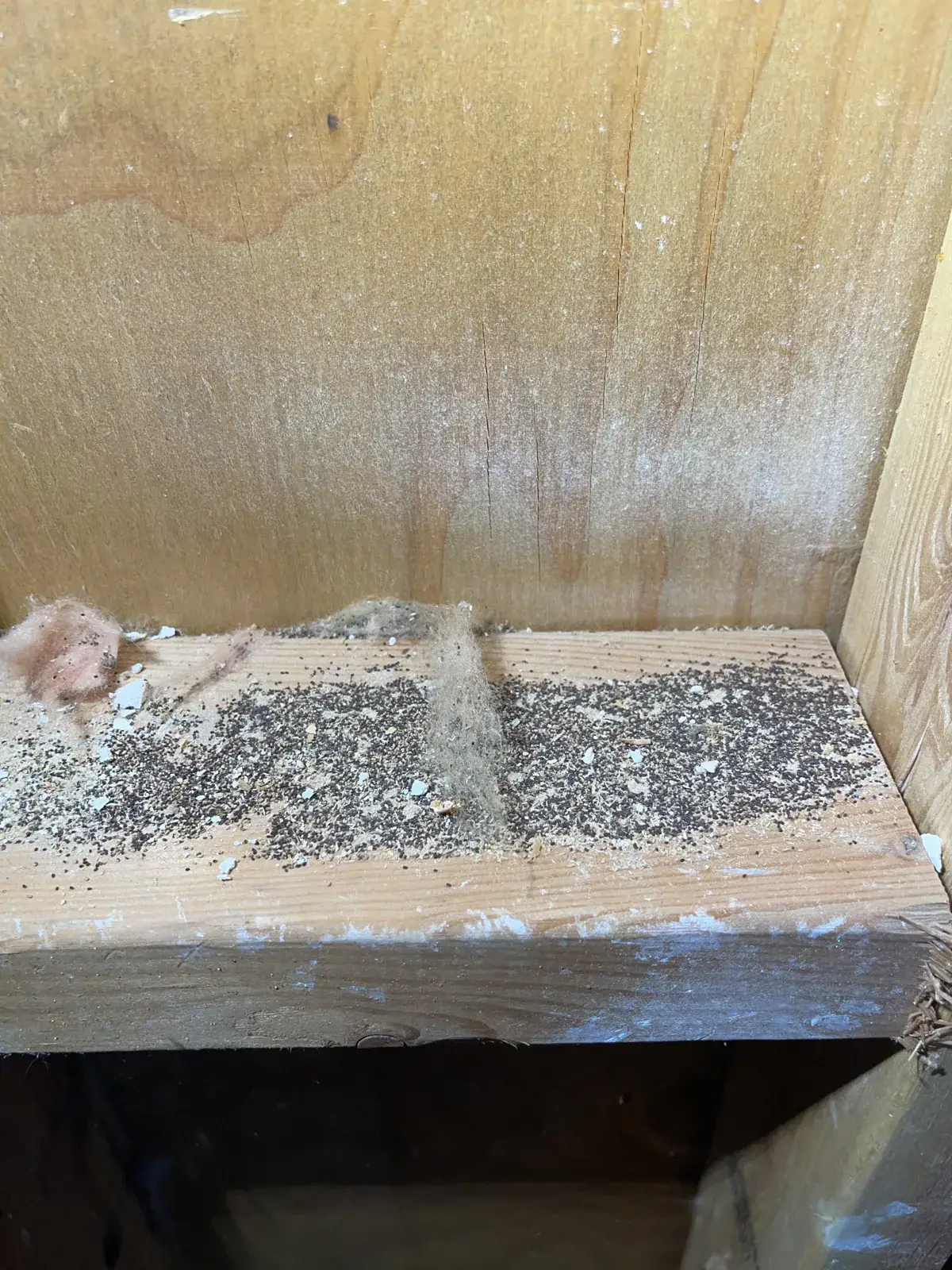
- The Tell-Tale Sign Drywood: piles of six-sided fecal pellets. Subterranean: mud tubes.
- Where We Find Them Drywood: attics, eaves, window and door frames, furniture, decks. Subterranean: foundations, crawlspaces, slab cracks, wood touching soil.
- Swarms Drywood: daytime in summer and fall. Subterranean: sunny afternoons after a soaking rain in spring or fall.
- Treatment Drywood: local treatment or whole-structure tenting. Subterranean: soil treatment.
Drywood Termites
The UC IPM Drywood Termites Pest Note calls the western drywood termite California’s second most important termite pest and the most common drywood species. It lives deep inside sound, dry wood, so it can start a colony anywhere a swarmer lands: rafters, fascia boards, window frames, a wooden fence or a dresser.
Because they stay hidden, drywood termites are hard to find. Our inspectors look for feeding damage, shed wings, kickout holes smaller than 2 mm, and the fecal pellets that termites push out through them. UC IPM notes the pellets have six flat sides and are diagnostic for drywood termites, but pellets alone cannot show whether the colony is still active or how far it goes. One trick from UC IPM: sweep up the pellets under a hole and check a few days later. New pellets suggest an active colony, though vibration can shake a few loose.
Damage cuts across the grain of the wood in smooth chambers, some packed with pellets. There is no soil or mud in the tunnels.
Subterranean Termites
The UC IPM Subterranean and Other Termites Pest Note calls subterranean termites the most destructive termites in California. They need moisture, so they nest in the soil and reach wood through tunnels or mud tubes, which are made of soil, saliva and bits of wood. You might see tubes on a foundation wall, a pier in the crawlspace, or the inside of a garage wall. Break one open and you may see pale workers inside.
Damage follows the grain of the wood: they eat the softer layers and leave the harder ones, often with soil in the galleries. The wood can look blistered or darkened and is easy to push a screwdriver into. Leaks, poor drainage, sprinklers hitting the walls, wood touching soil and stucco that runs down into the dirt all make a house more inviting.
What About Dampwood Termites?
Dampwood termites are larger and need wet, often decaying wood, so we find them in leaky decks, stairs and trim near the coast. UC IPM says they cause less costly damage than drywood or subterranean termites and are best handled by fixing the moisture problem and replacing the damaged wood. Finding them is really a sign of a leak.
How Each One Is Treated
Drywood Termites
UC IPM divides drywood treatment into two kinds. A local (spot) treatment goes directly into the infested boards and works well when the colony can be found and reached. A whole-structure treatment, usually fumigation, treats every colony at once, including the ones hidden behind walls. UC IPM notes that with local treatment one can never be fully sure every hidden colony was found. We recommend spot treatment when the activity is limited and reachable, and tenting through licensed fumigation partners when it is spread out or hidden. Cal Termite does not do the fumigation itself.
Subterranean Termites
Tenting does not reach termites living in the soil. Subterranean termites are treated with a soil treatment applied along and under the foundation, the barrier approach UC IPM describes as trenching, drilling or rodding around the structure. When we treat subterranean termites, we also break down tubes and point out the moisture and wood-to-soil problems that let them in.
Which Do I Have?
Use the comparison above as a guide, but have it confirmed. Flying ants, wood-boring beetles and carpenter ants can be mistaken for termites, and many older homes have both drywood and subterranean termites at once. Our free termite inspection checks for both and ends with a written report and quote. If you are buying or selling, you will need an escrow termite report instead. For a list of what to look for, see our guide to signs of termite damage, and for timing, see when termites swarm.
How Cal Termite Handles It
- Free inspection for homeowners, with a written report and quote before any work starts.
- Spot treatment, soil treatment, or tenting through licensed fumigation partners, matched to the termite we actually find.
- Wood repair by our own crew. Our pest control license is PR 7556 (Branches 2 and 3).
- Extended Care from $35 per month, which includes yearly inspections; ask us for the written plan terms.
- Termite work carries a warranty: 3 years after tenting, 1 year after a local treatment and 1 year on repairs.
Common Questions
How Can I Tell Drywood From Subterranean Termites Myself?
Look at the evidence. Small piles of hard, six-sided pellets under wood point to drywood termites. Mud tubes on a foundation or wall point to subterranean termites. Damage that follows the grain and is packed with soil also points to subterranean termites.
Can a House Have Both Kinds?
Yes. Drywood termites can be in the attic or window frames while subterranean termites come up from the soil under the same house. An inspection checks for both.
Does Tenting Kill Subterranean Termites?
Tenting is a whole-structure treatment for drywood termites. Subterranean termites live in the soil, so they are treated with a soil treatment around and under the house, not by tenting.
Can I Treat Termites Myself?
UC IPM says the products that work on drywood termites are not available to homeowners, and both kinds need a careful inspection to find where the colony is. You can help by fixing leaks and removing wood that touches the soil.