
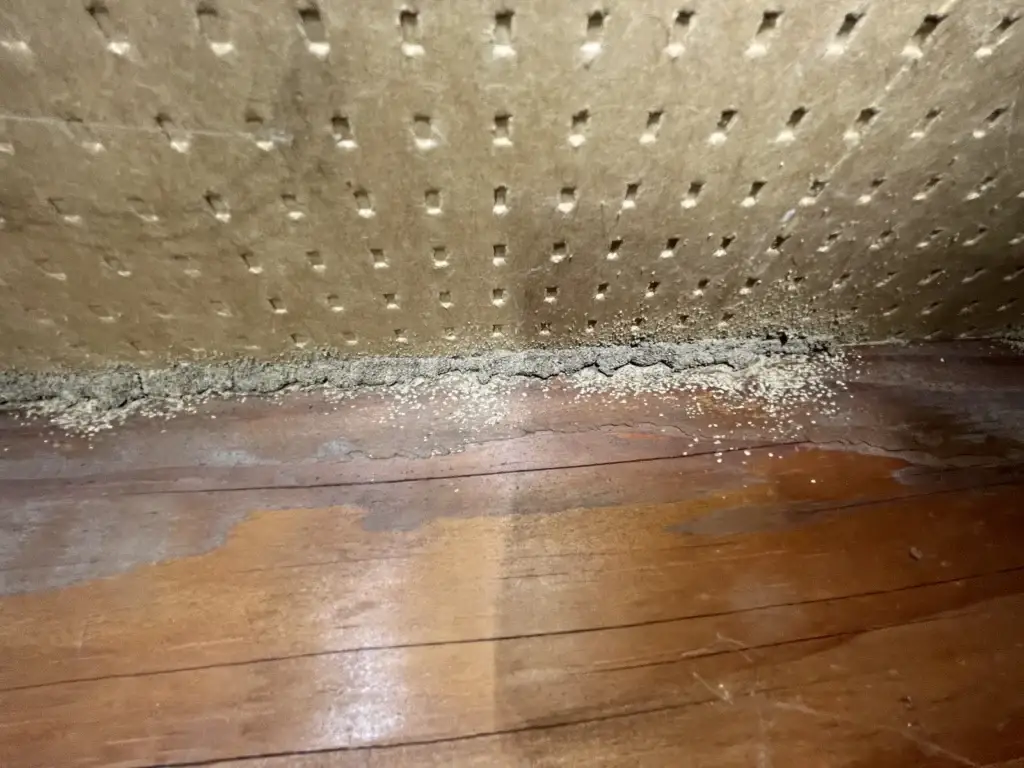
Finding a little pile of pellets on a window sill or a swarm of winged insects in the garage is usually how termites get noticed. Homeowners often call those pellets termite droppings. They are small, hard, six-sided fecal pellets. A free termite inspection from Cal Termite & Pest Control tells you what you are dealing with, how far it has spread and what it would take to fix, before you spend anything. We inspect homes and buildings across Ventura, Santa Barbara and Los Angeles counties from our offices in Ventura, Woodland Hills and Santa Barbara, under our Structural Pest Control Board registration PR 7556 (Branch 3).
What We Check
A licensed inspector looks over the accessible parts of the structure for evidence of termites and other wood-destroying organisms:
- Exterior and Roof Edges: eaves, rafter tails, fascia, siding, window and door trim, and the foundation for mud tubes.
- Attic: rafters, sheathing and ceiling joists, where drywood termite pellets often collect.
- Crawlspace or Slab: mud tubes on piers and foundation walls, wood touching soil, moisture, leaks and cellulose debris; on slab homes, cracks and plumbing penetrations.
- Garage and Interior: baseboards, door and window frames, and stored wood.
- Decks, Patios, Fences and Attached Structures that touch the house.
- Every room and closet inside, plus the roof framing. We check the roof structure for wood damage, not whether the roof keeps water out.
A termite inspection is visual and covers what can be reached. We tell you plainly which areas could not be inspected, such as a finished-over crawlspace, so you know where questions remain.
What We Look For
- Drywood Termites: small, hard, six-sided pellets, tiny kickout holes in wood, and shed wings. UC IPM notes the western drywood termite is the most common drywood species in Southern California (UC IPM Drywood Termites).
- Subterranean Termites: pencil-width mud tubes, damage that follows the grain of the wood, and swarmers in spring. UC IPM says they forage year-round in California (UC IPM Subterranean Termites).
- Fungus (Dry Rot) and Wood-Boring Beetles, which also damage framing and trim.
- Conditions That Invite Termites: earth-to-wood contact, leaks, poor ventilation, and mulch or firewood against the house.
What You Get Afterward
You get a written report of what we found and where, and a written quote that lists each recommended step with its price, so you can do only what you choose. Options can include spot treatment of reachable boards, soil treatment for subterranean termites, tenting through our licensed fumigation partners when drywood termites are widespread, and wood repair by our own crew. See Termite Control for how each works.
If you ask, the inspector goes over the findings with you or your agent before leaving. We email the report and quote, usually within 24 hours, and you can sign the paperwork online. Want us to look at something first? Text photos to the number we text you from, or email them to admin@caltermite.com.
Buying or Selling a Home?
A sale usually needs a formal Wood Destroying Pests and Organisms report with Section 1 and Section 2 findings, filed with the Structural Pest Control Board. That is a different, priced inspection. See Escrow Clearance for how it works and what escrow needs to close.
Before the Inspector Arrives
- Unlock the attic and crawlspace hatches and make a path to them.
- Move stored boxes away from garage walls where you can.
- Leave any pellets, wings or mud tubes in place, and note where and when you saw them.
- Have a list of past termite work on the home if you have one.
Related guides: See our signs of termite damage guide, what a termite inspection costs, how to choose a pest control company and customer reviews.
Common Questions
Is the Termite Inspection Really Free?
Yes, for homeowners. You get a written report of what we found and a written quote before any work. Escrow WDO reports for a sale are separate. Homeowner and commercial termite inspections are free; escrow inspections are usually $95.
How Often Should I Have My Home Inspected?
UC IPM suggests every 3 to 5 years for subterranean termites. Homes that have had drywood termites, or that sit near older wood structures, benefit from a yearly check.
What Happens If You Find Termites?
We show you what we found, explain the options, such as spot treatment, soil treatment or tenting, and give you a written quote. There is no obligation.
Should I Spray Before You Come?
No. Leave the pellets, wings and mud tubes where they are. Spraying or cleaning first makes it harder to tell how active the termites are.
When Will I Get the Report?
Usually within 24 hours, by email, along with the written quote. You can sign the paperwork online.
Can I Send You Photos First?
Yes. Text them to the number we text you from, or email them to admin@caltermite.com.
What Do Section 1 and Section 2 Mean in a Termite Report?
Section 1 lists active infestations, infections and conditions that are causing damage, such as leaks or earth-to-wood contact. Section 2 lists conditions that could lead to a future infestation, such as a leak that may cause fungus growth. Areas the inspector could not fully see, for example behind stored items, are listed as further inspection areas.
What If More Damage Turns Up Once Repairs Start?
We issue a supplemental report. A supplemental report covers additional damage found during repairs, or any further inspection that is needed after the first report.
What Is the Difference Between a Complete and a Limited Report?
A complete report covers the whole structure, including attached structures, and is used for detached homes. A limited report covers specific areas only, which is common for condos and townhouses.
How Long Does a Termite Inspection Take?
A termite inspection covers the structure and access, so the length varies by the building. We inspect first and then provide written findings. Homeowner and commercial termite inspections are free; escrow inspections are usually $95. We give a projected arrival window when we book.
What Is the Difference Between a Free Termite Inspection and an Escrow Inspection?
A termite inspection, when you are not in a sale, is free, and so is a commercial termite inspection. An escrow inspection is the report used in a sale. Homeowner and commercial termite inspections are free; escrow inspections are usually $95. In both cases we inspect and provide written findings before quoting treatment.
I Found Termite Droppings by My Window. What Should I Do?
Homeowners often call drywood termite pellets termite droppings. They are small, hard, six-sided fecal pellets that pile up on window sills, floors and shelves. Do not spray them. Leave the pellets, wings and tubes in place so the inspector can see them, or save a few in a sealed bag, and take a photo of where you found them. Then book a free termite inspection.
Why Homeowners Call Cal Termite for Termites
- Free inspection and a written quote before any work starts.
- Same-day service is available.
- A warranty on termite work: 3 years after tenting, 1 year after a local treatment, and 1 year on wood repairs.
- Local offices in Ventura, Woodland Hills and Santa Barbara.
- Award-winning pest control, rated 5 stars by 750+ customers.