
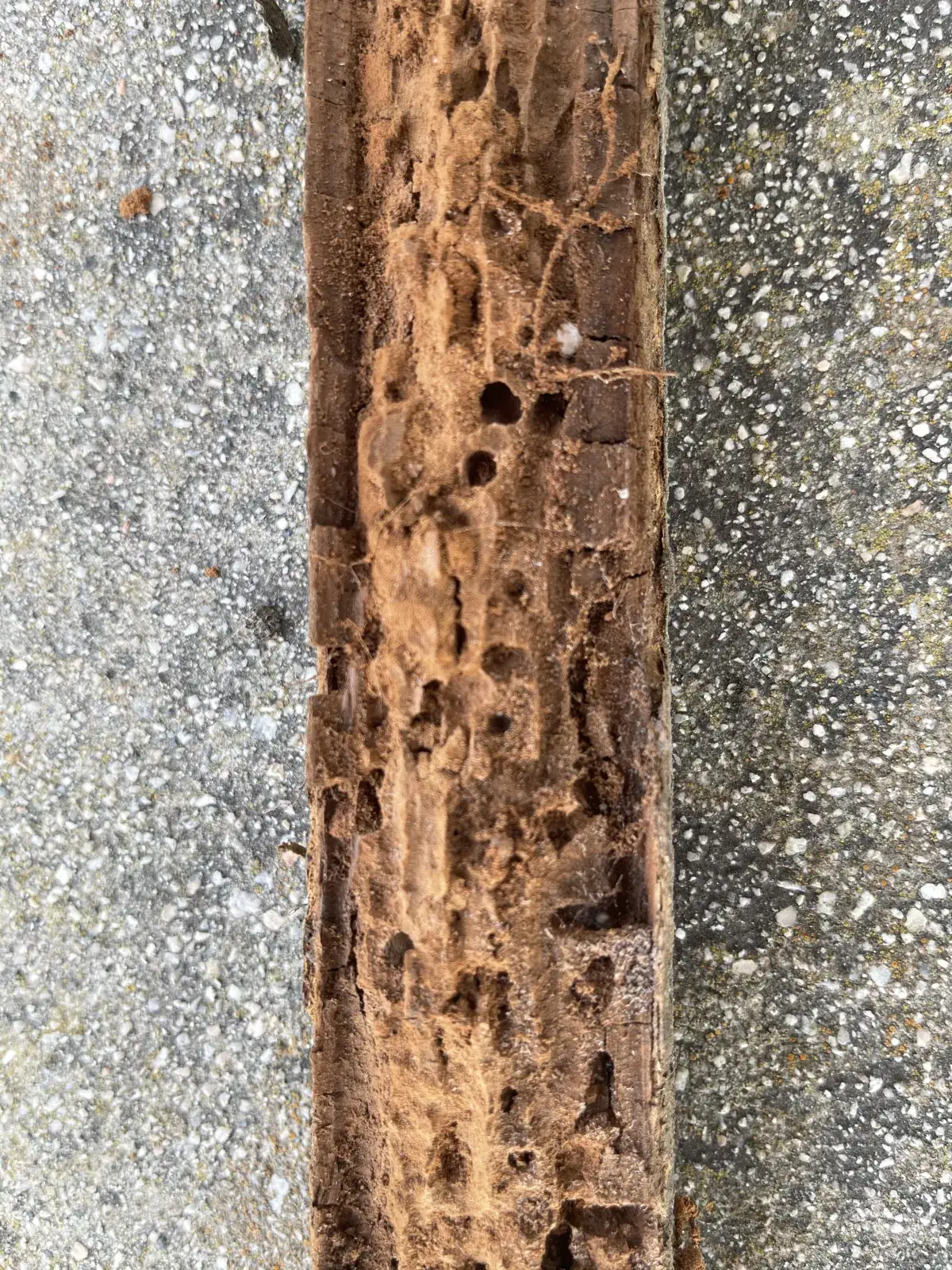
Ventura has its Craftsman bungalows and Westside cottages, Santa Barbara its Spanish Colonial Revival homes with tile roofs over wood rafters, and the San Fernando Valley its mid-century ranch houses. Older homes like these have something in common: decades of exposure to the termites that live here. This guide shows you what termite damage actually looks like, how to tell drywood from subterranean signs, what to check in an older house, and what to do when you find something. Homeowners often call drywood termite pellets termite droppings; this guide uses the accurate name, six-sided fecal pellets, and shows what to do if you find them.
The Two Termites Behind Most Damage Here
Most of the termite damage we see comes from two kinds. Western drywood termites live entirely inside the wood they eat, need no contact with soil, and can start in attics, eaves, trim and furniture. Western subterranean termites nest in the soil and reach the house through mud tubes or wood that touches the ground. A third kind, dampwood termites, show up mostly in wet, decaying wood near the coast, and UC IPM calls them a sign of a moisture problem. For a side-by-side guide, see drywood vs subterranean termites.
Signs of Drywood Termites
- Fecal Pellets Small, hard pellets that pile up on window sills, floors and shelves under infested wood. Per the UC IPM Drywood Termites Pest Note, the pellets have six flattened sides, and that shape is what sets them apart. They often look like coarse sand or ground pepper and come back after you sweep.
- Kickout Holes Tiny round holes, less than 2 mm across, that termites use to push pellets out of the wood. Look just above the pellet piles.
- Shed Wings Swarmers drop their wings after they land, so small piles of wings near windows, doors and light fixtures mean a swarm came from inside or close by. Drywood termites swarm in daylight in summer and fall; see when termites swarm here.
- Damage Across the Grain Drywood termites carve smooth chambers that cut across the grain of the wood, and some chambers are packed with pellets.
Signs of Subterranean Termites
- Mud Tubes Pencil-width tubes of soil and saliva running up the foundation, crawlspace piers, stem walls or garage walls. The UC IPM Subterranean and Other Termites Pest Note calls them the most common evidence of subterranean termites. Break one open and you may see live termites inside.
- Damage Along the Grain Hollow tunnels that run lengthwise with the grain, often with soil stuck to the walls. The surface can look fine while the inside is gone.
- Darkened or Blistered Wood UC IPM notes that damaged wood may darken or blister and is typically thin at the surface and easy to push a screwdriver through.
- Swarms After Rain Western subterranean termites swarm on warm, sunny afternoons after a soaking rain in spring or fall.
What to Check in an Older Home
You do not need special tools for a first look. A flashlight, a screwdriver and twenty minutes will cover most of it:
- Window Sills and Baseboards Look for pellet piles, especially ones that return after you clean them.
- Attic Check rafters, roof sheathing and the tops of walls for pellets and kickout holes. In tile-roof homes, the wood under the tile is a common spot.
- Eaves, Fascia and Exposed Rafter Tails These take the most weather, and drywood termites often start in them.
- Crawlspace and Foundation In raised-foundation homes, look for mud tubes on piers and stem walls, and for wood that touches the soil.
- Porches, Decks and Stairs Probe posts and stair stringers where they meet soil or concrete. Soft, wet wood can mean dampwood termites or decay.
- Garage and Door Frames Tap the wood. Hollow or papery-sounding wood, or wood that gives under light pressure, is worth a closer look.
- Leaks and Wet Spots Leaking pipes, drains and sprinklers that soak the foundation keep soil moist, which subterranean termites need.
Some signs are easy to mistake. Bubbling paint, sticking doors and sagging floors can come from termites, but more often come from moisture, settling or rot. Flying ants are often mistaken for termite swarmers. These are reasons to have someone look, not proof of termites.
What to Do If You Find Signs
- Do not spray it. Leave pellets, wings and tubes in place so the inspector can see them, or save a few in a sealed bag.
- Take a photo of where you found them.
- If you see pellets, sweep them up and check again in a few days. UC IPM notes that pellets alone do not prove the colony is still active, and new pellets are a better sign.
- Book an inspection. UC IPM recommends a professional for this, because the extent of an infestation is hard to judge and the places to check (attics and crawlspaces) can be tight and hazardous.
How Cal Termite Handles It
Our free termite inspection covers the inside, the attic and crawlspace where we can reach them, the garage, and the outside of the house, and ends with a written report and quote before any work starts. From there, termite control is matched to what we find: spot treatment for drywood termites we can reach, tenting through licensed fumigation partners when activity is spread out or hidden, and soil treatment for subterranean termites. Damaged wood can be repaired by our own crew. Our pest control license is PR 7556 (Branches 2 and 3). If you are buying or selling, you will need an escrow termite report instead.
- Free inspection and a written quote for homeowners.
- Same-day service is available.
- Termite work carries a warranty: 3 years after tenting, 1 year after a local treatment and 1 year on repairs.
- Extended Care from $35 per month, which includes yearly inspections; ask us for the written plan terms.
Common Questions
What Does Termite Damage Look Like?
Drywood termites leave clean chambers that cut across the grain of the wood and push out small six-sided pellets. Subterranean termites leave hollow tunnels that run along the grain, often lined with soil, and build mud tubes. Damaged wood is often thin at the surface and gives way under a screwdriver.
Is a Pile of Pellets Always an Active Infestation?
No. UC IPM notes that pellets alone cannot tell you whether the colony is still active. Sweep them up and check the same spot a few days later; new pellets point to activity, but building vibration can shake old ones loose, so have it inspected.
Can I Treat Termites Myself With a Spray?
Store-bought sprays do not reach a colony living inside the wood or in the soil, so they rarely solve the problem. Leave the pellets or tubes in place so the inspector can see them, and book an inspection.
My House Is Old. Does That Mean It Has Termites?
No. Age alone does not mean a home has termites, but older homes have had more years of exposure, and often have crawlspaces, wood close to the soil, and weathered trim. That is why a routine inspection matters more as a house gets older.
I Found Termite Droppings by My Window. What Should I Do?
Homeowners often call drywood termite pellets termite droppings. They are small, hard, six-sided fecal pellets that pile up on window sills, floors and shelves. Do not spray them. Leave the pellets, wings and tubes in place so the inspector can see them, or save a few in a sealed bag, and take a photo of where you found them. Then book a free termite inspection.